


ENT (2 weeks)
Residents rotate in their first year at the ENT outpatient clinic of the New York Eye and Ear infirmary. Working closely with ENT residents and attendings, residents are exposed to a wide variety of complaints and have ample opportunity to perform fiber optic laryngoscopy in the evaluation of patients.
MICU (4 weeks)
Residents rotating through the Medical Intensive Care Unit (MICU) in their first year will actively contribute to patient care, receiving exposure to critically ill patients. This is an opportunity to learn about mechanical ventilation, the use of many pharmacologic agents to support blood pressure and engage in a number of invasive procedures.
Labor and Delivery (1 week)
Residents work as a member of the Labor and Delivery team at Elmhurst Hospital Center. The clinical experience begins with the triage evaluation of 2nd and 3rd trimester presentations and complications, as well as active labor. ED residents also play an active role in the delivery process to improve their competency with both uncomplicated and difficult deliveries in preparation for future emergency deliveries.
Ophthalmology (2 weeks)
Residents spend their rotation in the outpatient clinics and emergency walk-in center at one of the country’s premier ophthalmology training centers - The New York Eye and Ear Infirmary. The experience provides an opportunity to enhance our technical skills in the basic ocular and retinal examinations, as well as the slit-lamp examination. Furthermore, residents improve their competency in the evaluation and management of common ocular complaints of acute visual changes or visual loss, the “red” eye, inflammatory changes, and foreign bodies.
Orientation (4 weeks)
First year residents spend the first month of their residency program with a 4 week introductory course to the practice of Emergency Medicine. The schedule includes core curriculum lectures and workshops for training in ultrasound, suturing, slit-lamp/tonometry examinations, splinting, and sexual assault forensic exams. In addition, residents work an average of 2 shifts per week in the adult or pediatric emergency departments to familiarize themselves with the ebb and flow of our departments.
Orthopedics/ Ultrasound (4 weeks)
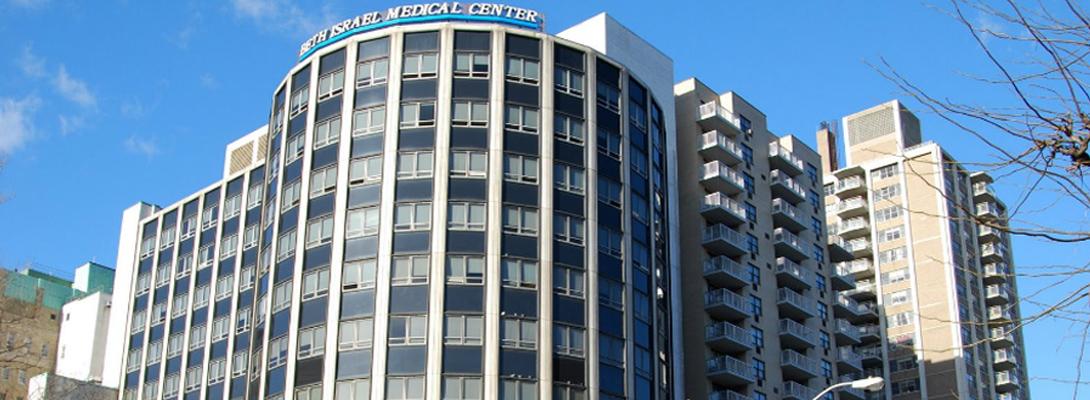
Orthopedics: Residents work in the Emergency Department at Beth Israel exclusively on orthopedics cases. In this capacity they gain experience in the evaluation and management of common ED presentations; which include fractures, dislocations, partial amputations, and post-surgical complications. casting, splinting, joint aspirations and the evaluation of common orthopedic complaints such as low back pain, joint pains, and pediatric related disorders.
Ultrasound: While in the Emergency Department at Beth Israel, residents will perform ultrasound studies on patients waiting for official studies. As a graduation requirement, over the course of three years of training, residents must perform 300 ultrasound studies: 50 cardiac, 50 pelvic, 50 gallbladder, 50 aortic, 50 renal, and 50 Focused Assessment with Sonography for Trauma (FAST). Opportunities for ultrasound use in the Emergency Department are emerging daily. Residents graduate certified to perform these ultrasounds in daily practice.
Medical Coding (1 day): During one day of your ortho/ultrasound rotation, you will be exposed to the billing aspect of medicine. As part of this, you will be expected to go to 160 Water Street, 23rd Floor to meet with the head of coding, Sharda Budhan, to learn coding, and then will code 12 charts. Please reference the table below for your assigned dates during the 2013-2014 academic year. Please email Sharda Neeromanie Budhan
| Date | PGY-1 Resident | PGY-3 Resident |
| 7/26/2013 | Min Tzu Wang | |
| 8/8/2013 | Carey Li | Bess Stillman |
| 8/22/2013 | Salma Habib | |
| 9/5/2013 | Christine Lee | Eric Steinberg |
| 9/12/2013 | Christina Tran | |
| 10/15/2013 | Calvin Kong | David Chrostowski |
| 10/24/2013 |
|
|
| 11/14/2013 | Jennifer Sedor | Liang Ge |
| 12/5/2013 |
Chi Nga Chan / Kelly Tong |
|
| 12/19/2013 | Andrew Mastanduono | |
| 1/23/2014 | Dan Brandt | Liza Escobedo |
| 3/4/2014 | Evan Bishop-Rimmer | Phyllis Caces |
| 3/18/2014 | Nadia Baranchuk | |
| 4/24/2014 | Youyou Duanmu / Nicole Yuzak | Uyen Nguyen |
| 5/22/2014 | Raymond Marcovici | John Irwin |
| 6/12/2014 | Michael Menna | Christopher Wang |
Anesthesia (4 weeks)
During their EM1 year, residents rotate through the anesthesia department at Beth Israel. In the stable environment of the operating room, residents have the opportunity to manage airways, place endotracheal tubes and other airway devices, and learn about anesthetic agents. They also have the opportunity to gain more practice placing thoracotomy tubes in Cardiothoracic surgical cases. This rotation is combined with Ophthalmology and ENT afternoon clinics.
Trauma (4 weeks)
Residents spend 1 month in the EM1 year and 2 months in each of their EM2 and EM3 years of residency at Elmhurst Hospital in Queens, a major level 1 trauma center and part of the New York's Health and Hospital Corporation. The experience includes working as part of the ED trauma team. Residents gain experience and exposure to the assessment and management of trauma victims presenting with injuries from blunt and penetrating trauma. Clinical cases most commonly include victims of gun shot wounds, stab wounds, blunt head trauma, motor vehicle accidents, and pedestrians struck by vehicles.
Peds ED (Beth Israel) (4 weeks)
Residents in their First Year rotate through the Pediatric Emergency Department at Beth Israel. This rotation is designed as an introduction to Pediatric Emergency Medicine and includes several case presentations and daily lectures on essential topics. The rotation is split into two blocks that are 2 weeks each in varying seasons of the year, to expose our residents to the variety of season-based pediatric illnesses.


